Morocco 2026 Tax Changes: New VAT and Corporate Tax Rates
What changed in Morocco's 2026 tax rates: VAT converged to 20%/10%/0% (7% and 14% phased out) and corporate tax (IS) moved to 20%/35%. Sourced and dated.
Hisab
blog.updated 6/3/2026
Morocco 2026 Tax Changes: New VAT and Corporate Tax Rates
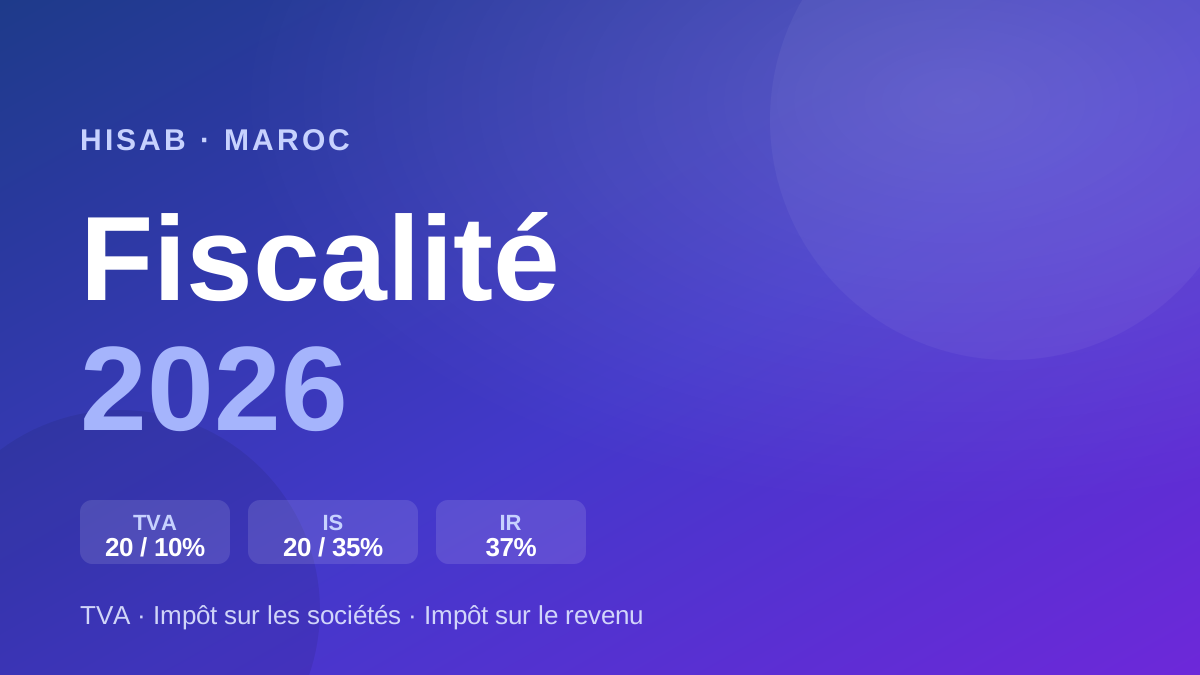
Morocco's tax landscape changed in 2026. VAT (TVA) converged to two main rates — 20% and 10% (plus 0%), and corporate income tax (IS) moved to a two-rate structure of 20% and 35%. Here's what changed, with sourced figures, so your invoices and accounting stay accurate.
Last verified: June 2026. Tax rates change with each annual Finance Law — always confirm with the official DGI.
What changed in 2026 — at a glance
| Tax | Before | 2026 |
|---|---|---|
| VAT (TVA) | 20%, 14%, 10%, 7%, 0% | 20%, 10%, 0% (7% and 14% phased out) |
| Corporate tax (IS) | Progressive brackets | 20% (income < 100M MAD), 35% (>= 100M); 40% financial sector |
| Income tax (IR) | Progressive | Top rate 37% (income > 180,000 MAD) |
VAT (TVA): from four rates to two
Following the 2024 Finance Law, Morocco progressively removed the 7% and 14% VAT rates by 2026. Affected goods and services were moved to 10%, to 0%/exempt, or kept at the 20% standard rate.
| Rate | Use |
|---|---|
| 20% | Standard — most goods and services |
| 10% | Reduced — specific categories defined by law |
| 0% | Zero-rated / exempt — exports and exempt operations |
What to do: review any products you previously invoiced at 7% or 14% and re-map them to the correct 2026 rate. In Hisab, you set the VAT rate per line and the totals (HT, VAT, TTC) are computed automatically.
Corporate income tax (IS)
For fiscal years starting on or after 1 January 2026, IS uses a two-rate structure:
| Net taxable income | IS rate |
|---|---|
| Under 100,000,000 MAD | 20% |
| 100,000,000 MAD and above | 35% |
| Financial sector (banks, insurance, etc.) | 40% |
A minimum contribution of 0.25% of turnover (minimum 3,000 MAD) still applies, waived for the first 36 months of activity.
Income tax (IR)
The personal income-tax scale is progressive, with a top marginal rate of 37% on annual income above 180,000 MAD; the first 40,000 MAD is exempt.
Why this matters for e-invoicing
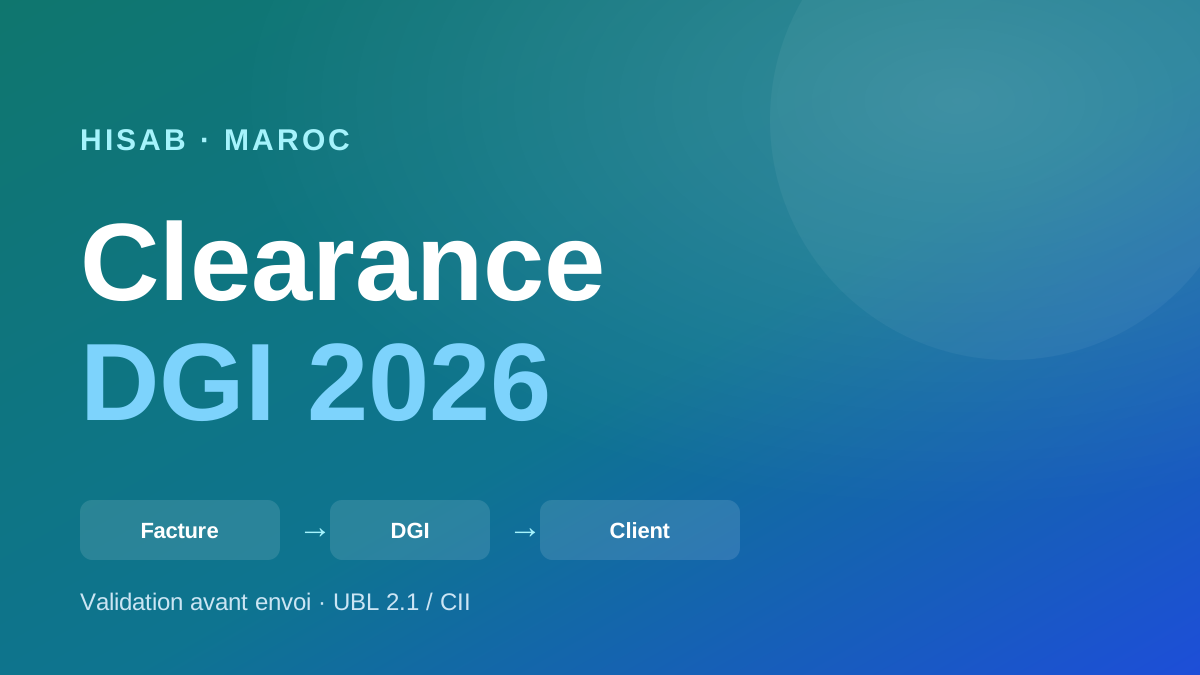
With Morocco's 2026 e-invoicing mandate rolling out (UBL 2.1 / CII formats, DGI clearance), invoices carry structured tax data that the DGI validates. Using an outdated VAT rate on an e-invoice can cause rejections or compliance issues — so getting the 2026 rates right matters more than ever.
See also: Morocco 2026 e-invoicing mandate guide · Tax rates reference · Glossary.
Sources
- DGI — Direction Générale des Impôts: https://www.tax.gov.ma/
- VAT / IS / IR rates: PwC Worldwide Tax Summaries — Morocco
- VAT rate convergence: 2024 Finance Law (Loi de Finances 2024)
Hisab is an independent e-invoicing software provider, not affiliated with the DGI. This article is informational and not tax advice.